Dongbay
1. Installation
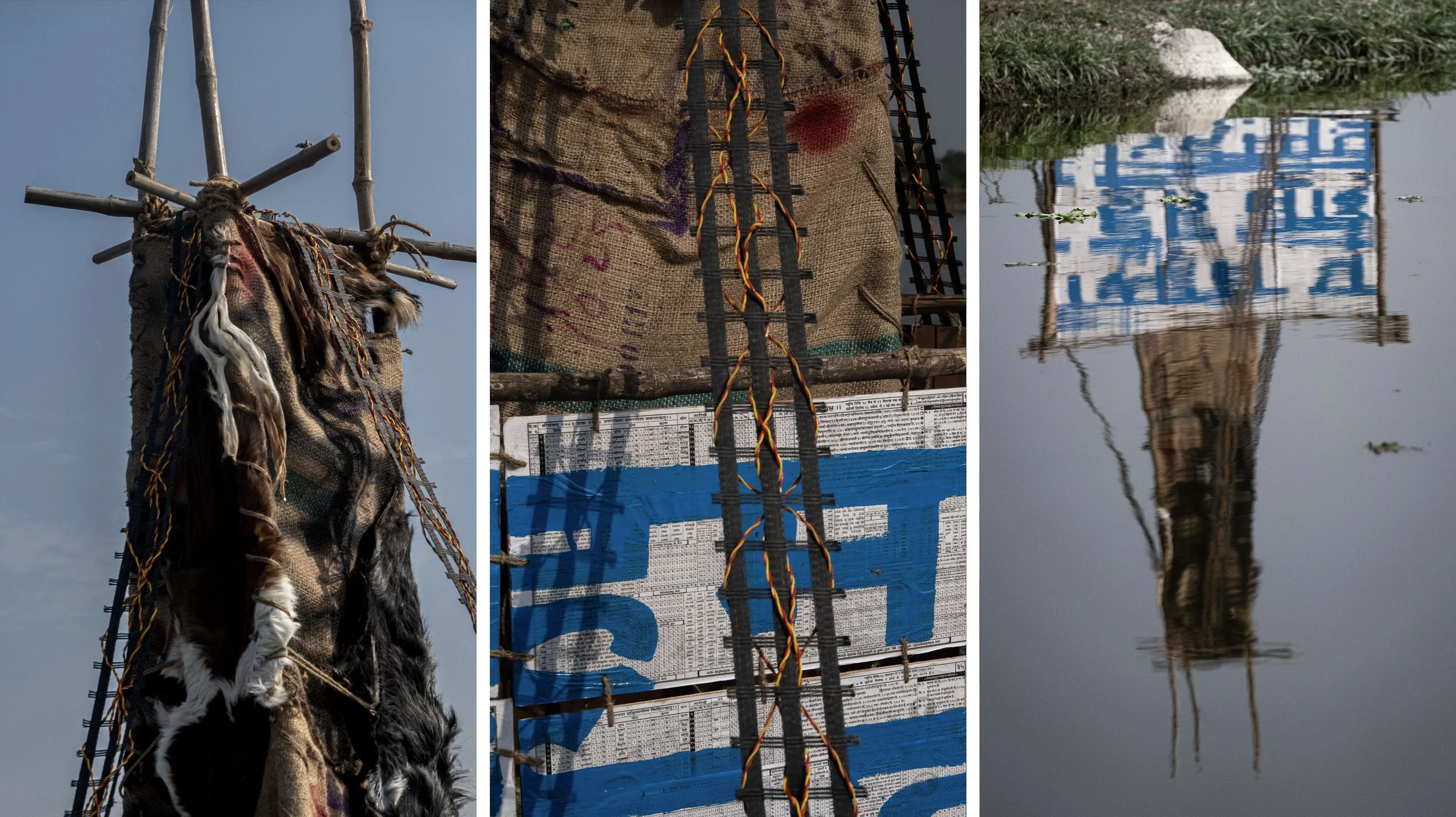
Goddess Who Sells Time
Recycled Animal Skins & Mixed Media
350(L) x 200(W) x 180(D) cm
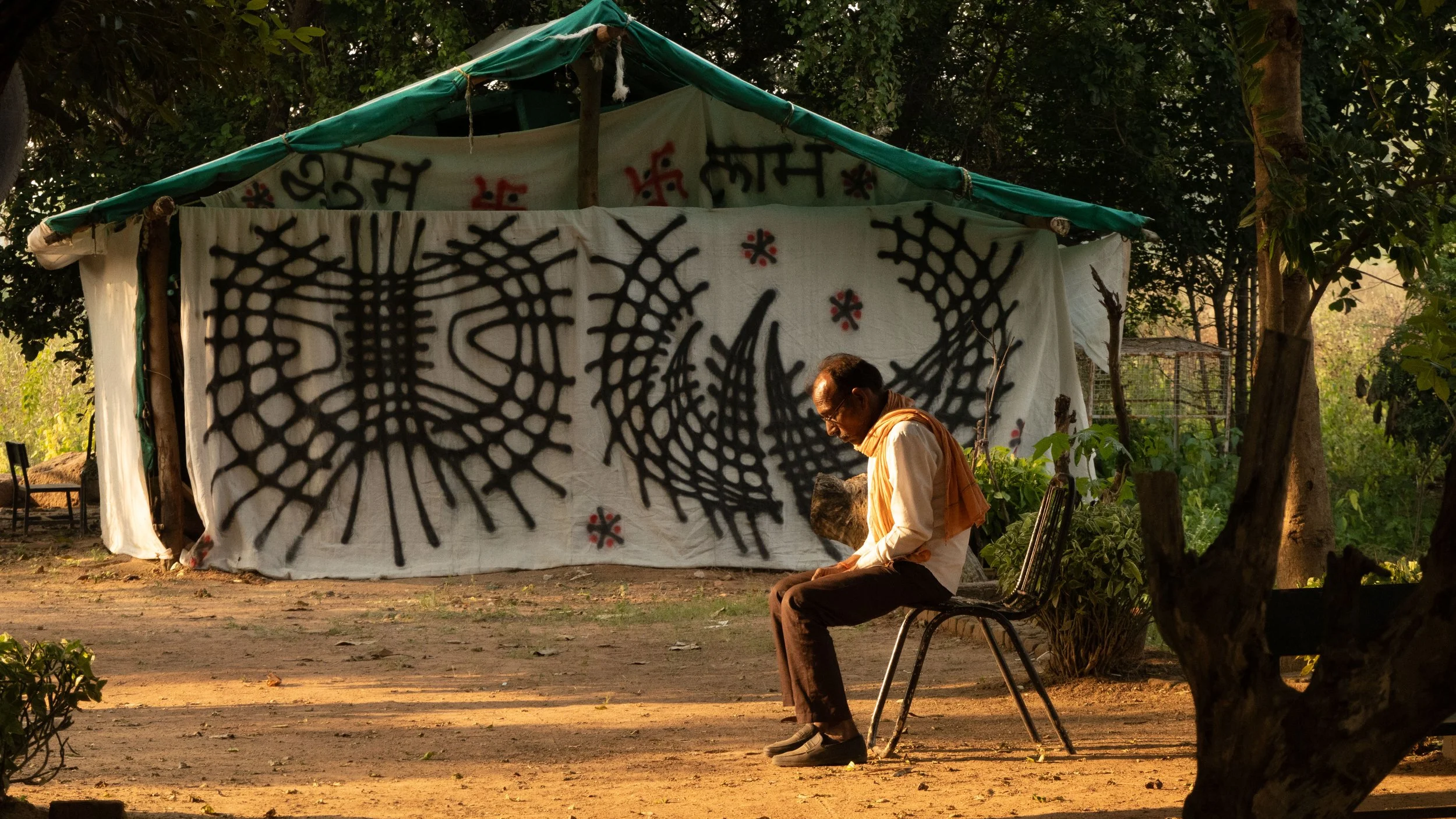
Goddess Who Sells Time is an installation examining how time and faith are exchanged within systems of power. Time appears as the final sacred resource, measured, purchased, withheld, and offered in contemporary life.
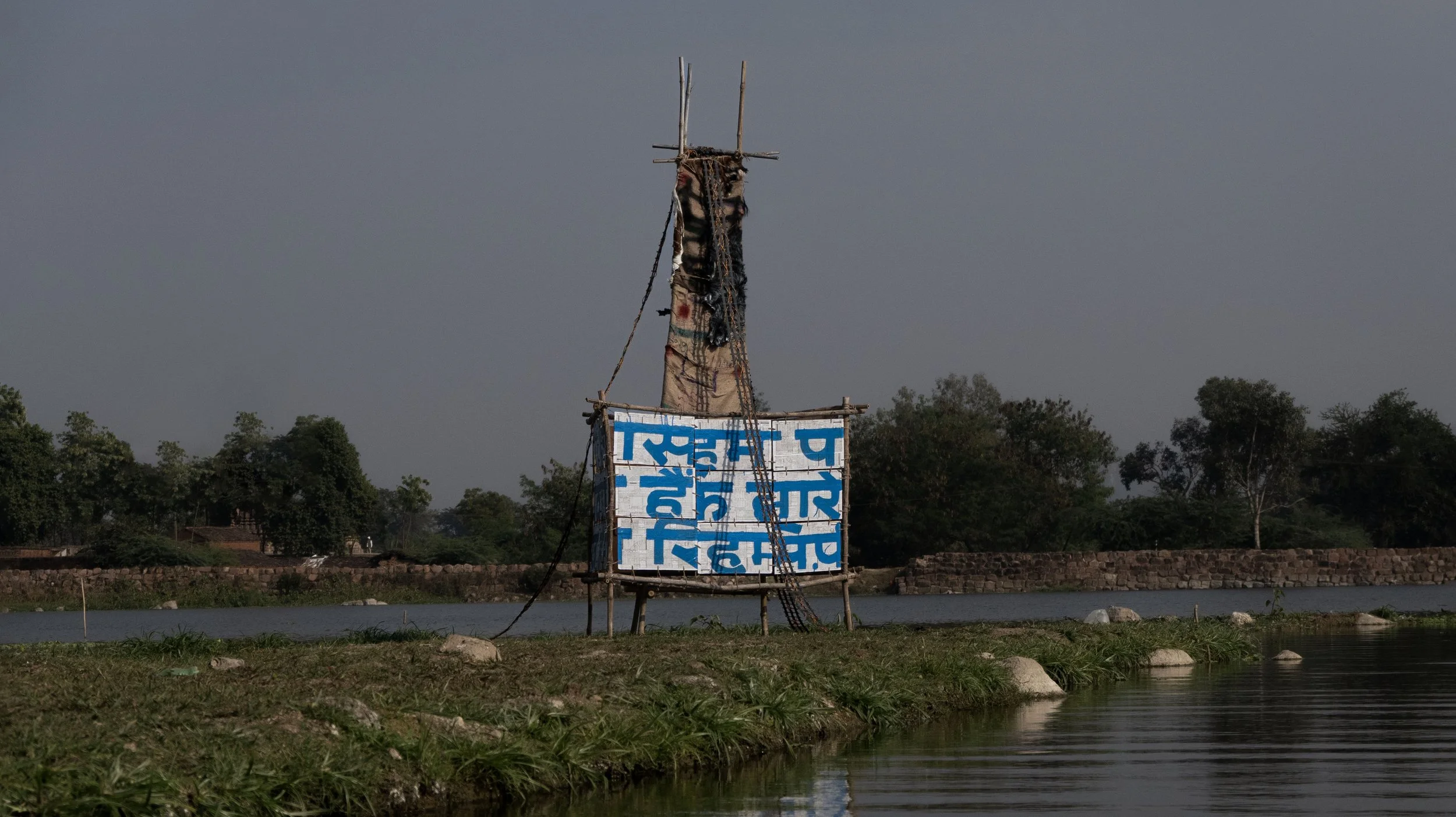
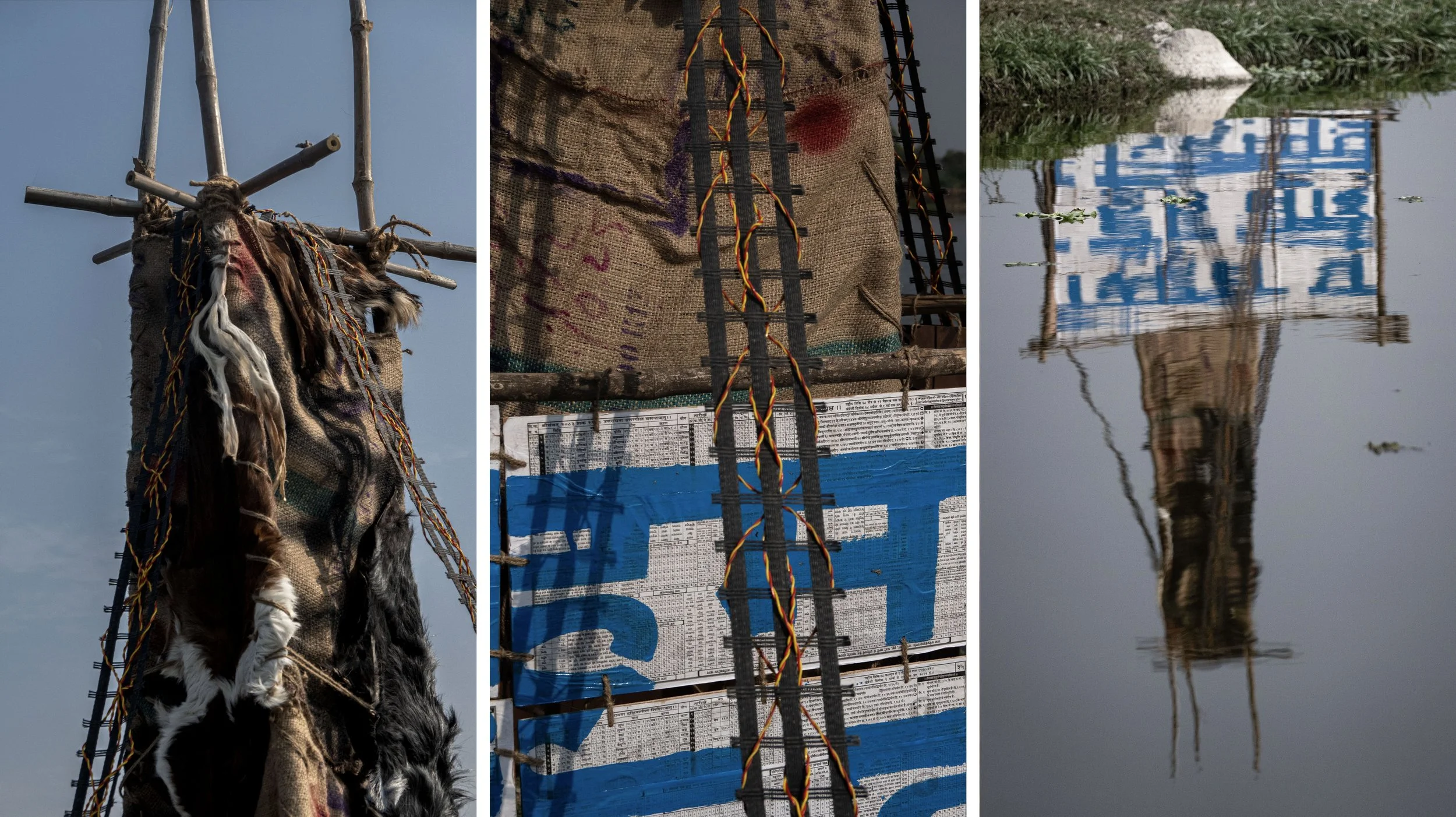
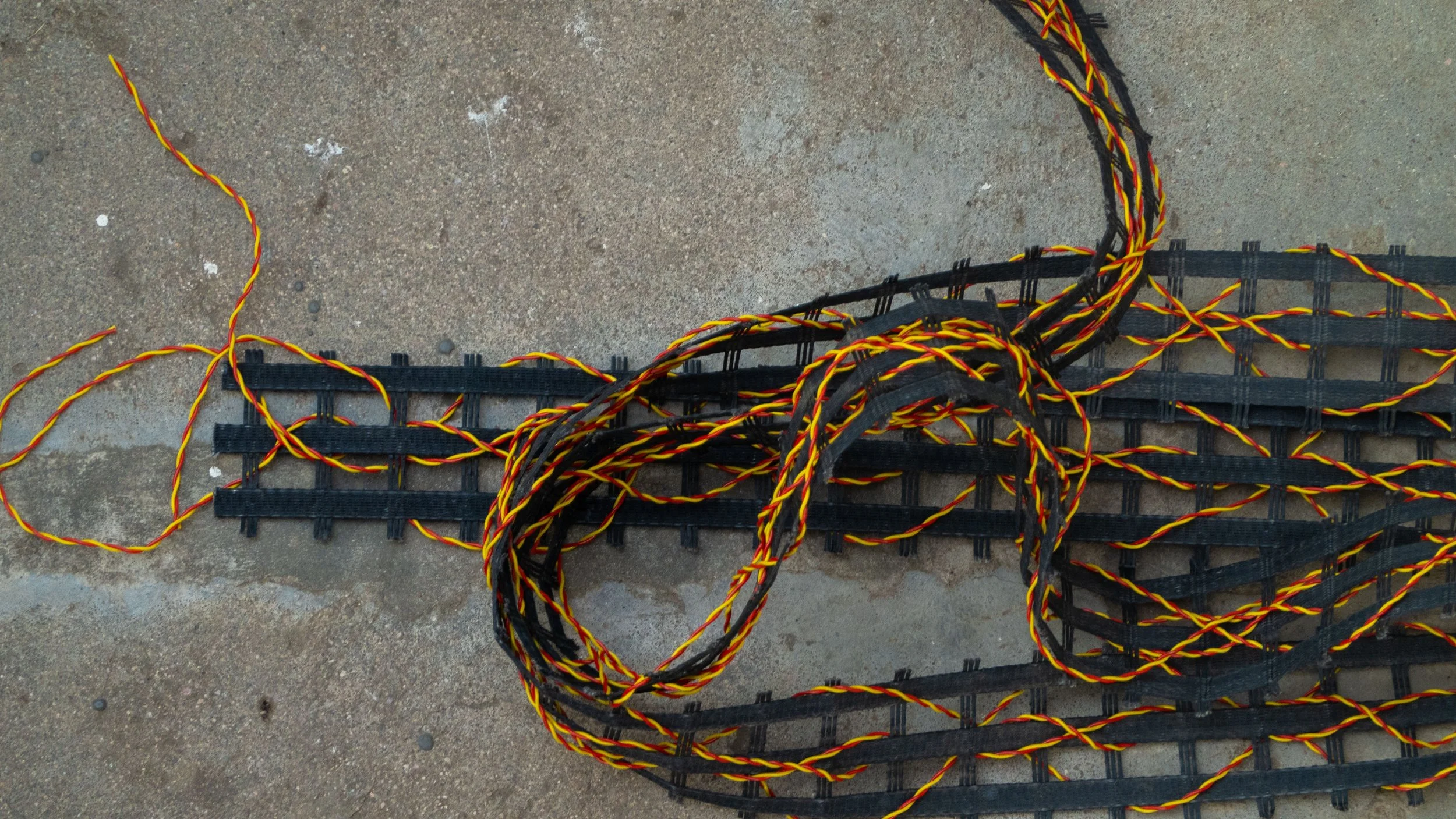
The work employs a rational reinterpretation of the headless goddess - Chhinnamasta, as a structural device rather than a religious image. Authority functions here as a mechanism through which reason turns inward and dismantles itself. The installation is constructed from bamboo scaffolding, recycled animal skins, electrical wires, construction tracks, and other materials gathered through local observation and field research, forming a Primitive Futurism structure that reflects cycles of labor, consumption, and abandonment.
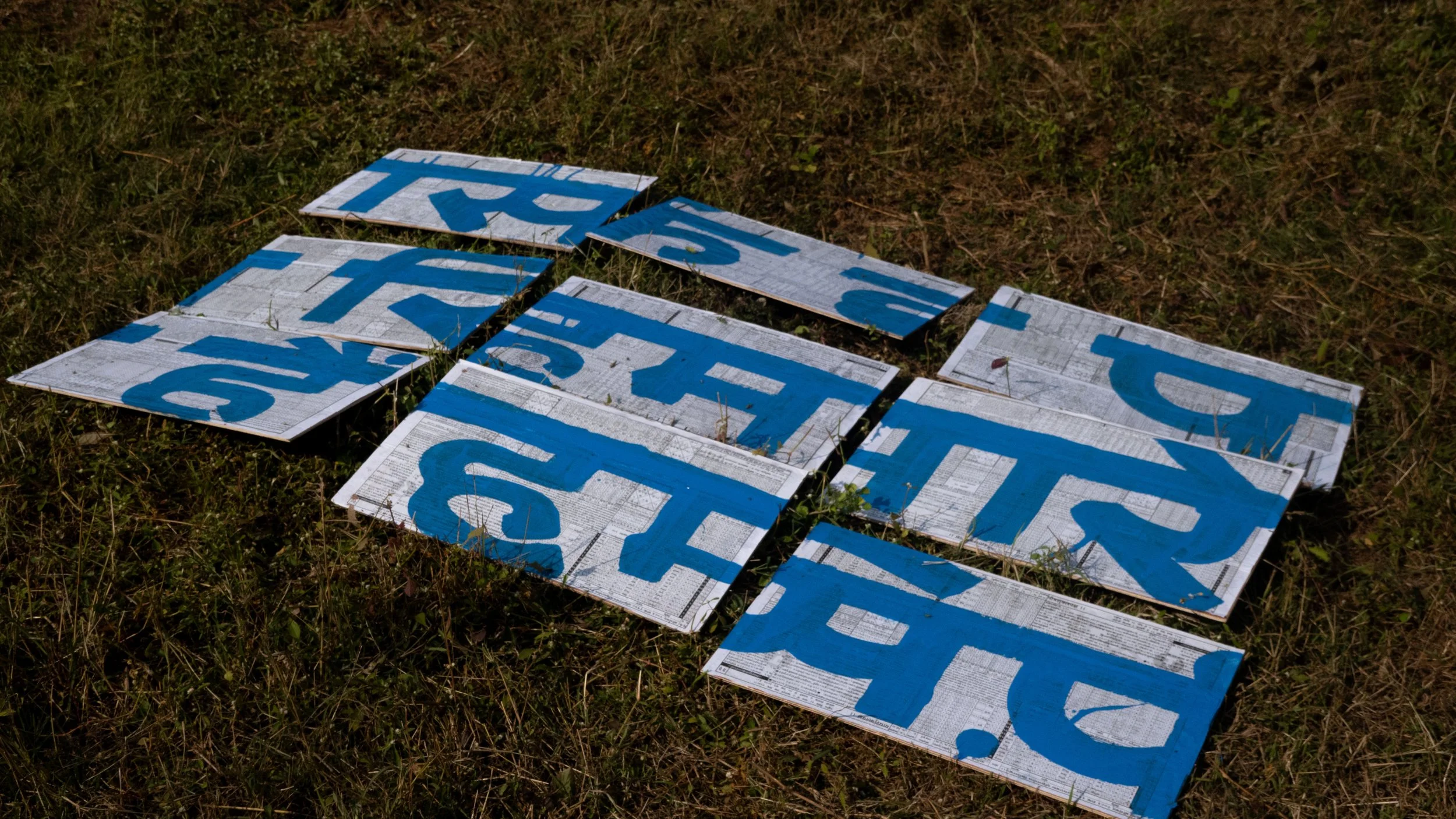
A series of fragmented puzzles forms an essential component of the work, requiring viewers to spend time reorganizing broken phrases. These puzzles serve as a temporal tool of slowing the body, holding attention, and redistributing time equally among viewers, particularly those from Dalit and working-class communities whose time is often extracted rather than respected.
Installed in an open public site in Khajuraho, India, the work shifts ritual away from enclosed institutions into shared space, where meaning emerges through duration, presence, and collective engagement rather than belief.
@totemdongbay, 2025

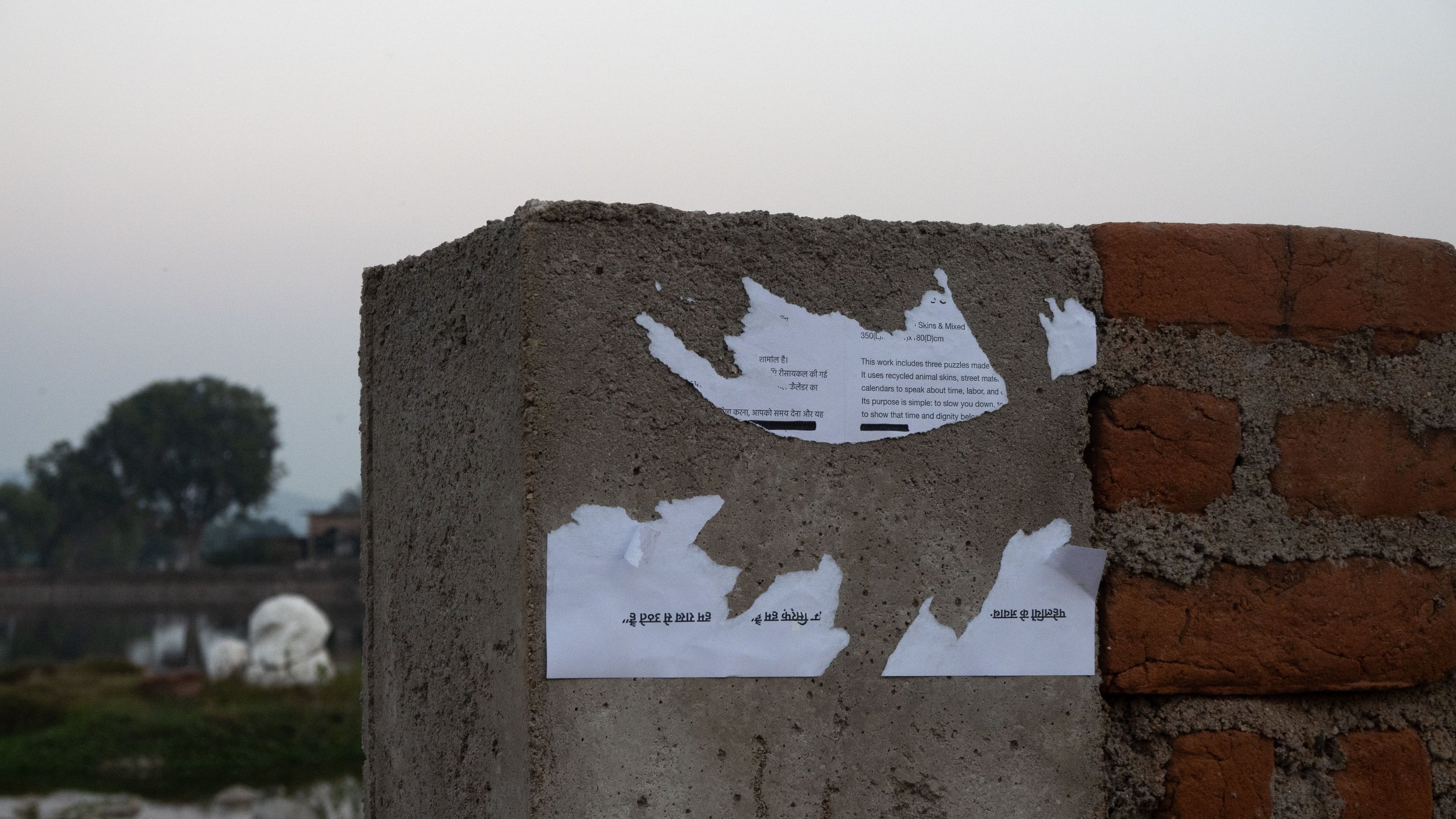
इस काम में टूटी-फूटी बातों से बनी तीन पहेलियां शामिल हैं।
इसमें समय, मेहनत और इज्ज़त के बारे में बताने के लिए रीसायकल की गई जानवरों की खाल, सड़क पर मिलनेवाली चीज़ों और लोकल कैलेंडर का इस्तेमाल किया गया है।
इसका मकसद आसान है: आपको धीमा करना, आपको समय देना और यह दिखाना कि समय और इज्ज़त सबकी है, किसी जाति या वर्गकी नहीं।
@totemdongbay, 2025

2. Moving Image & Street Practice
Writing India (2025)
Single-channel video
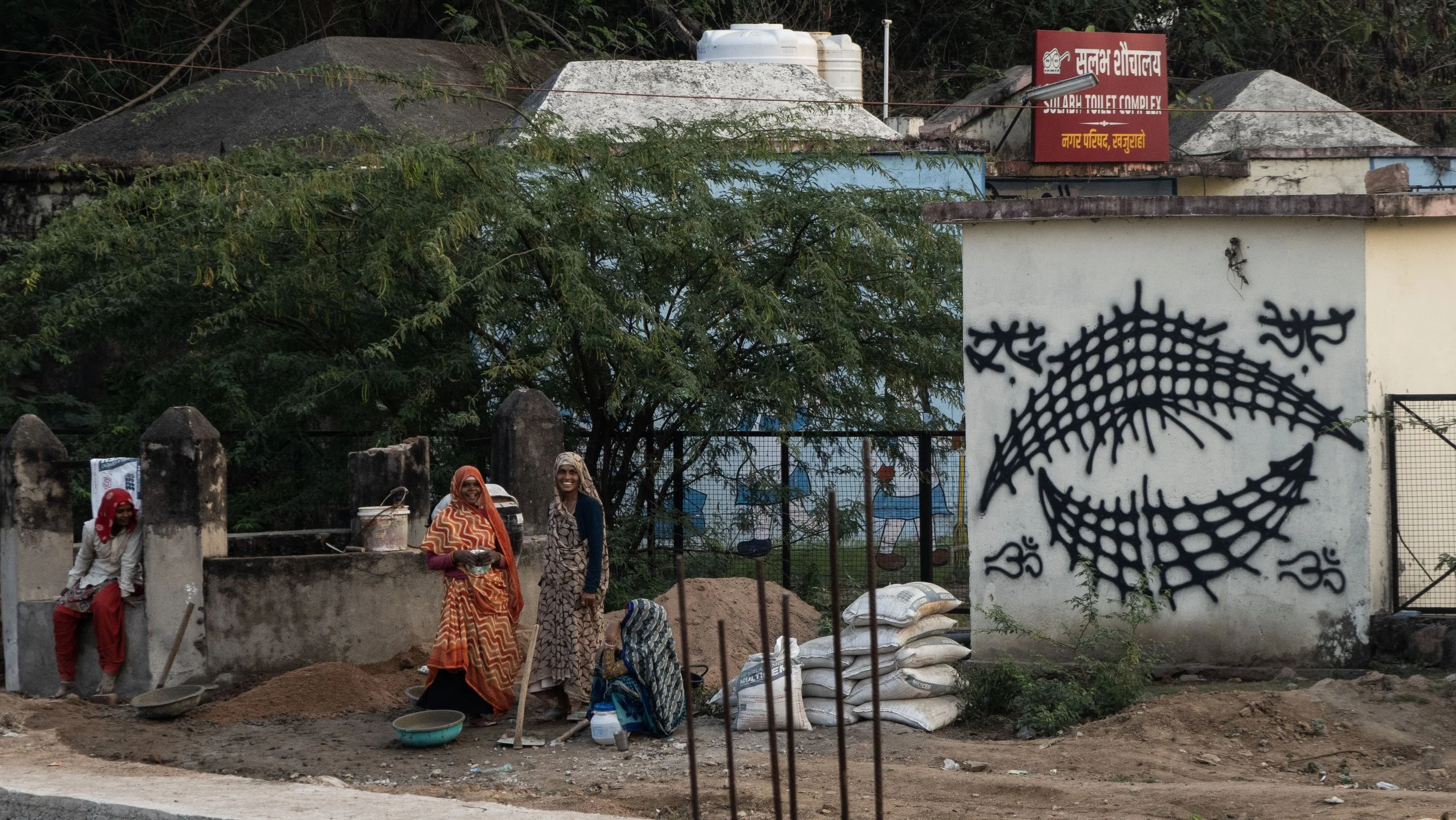
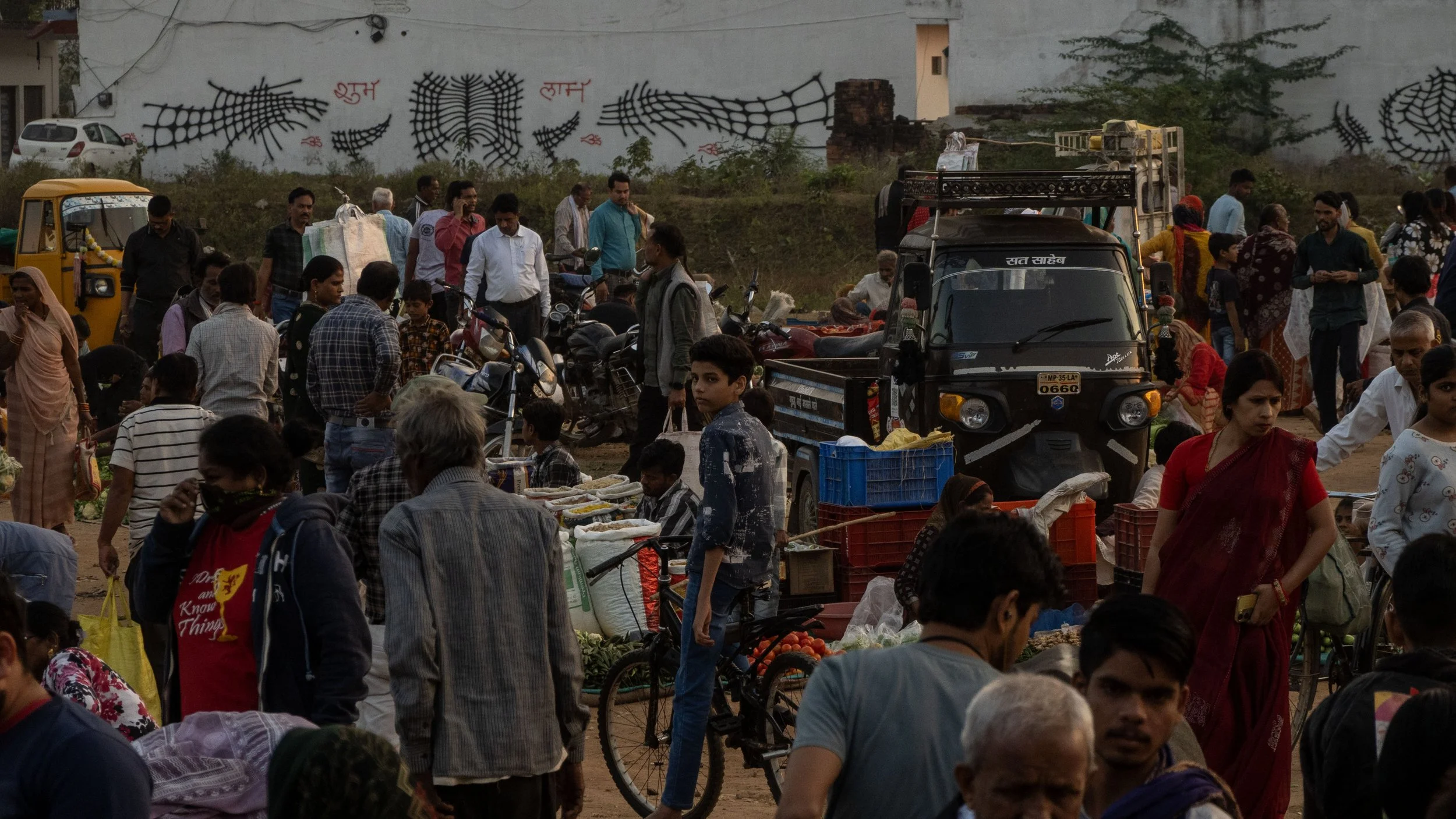
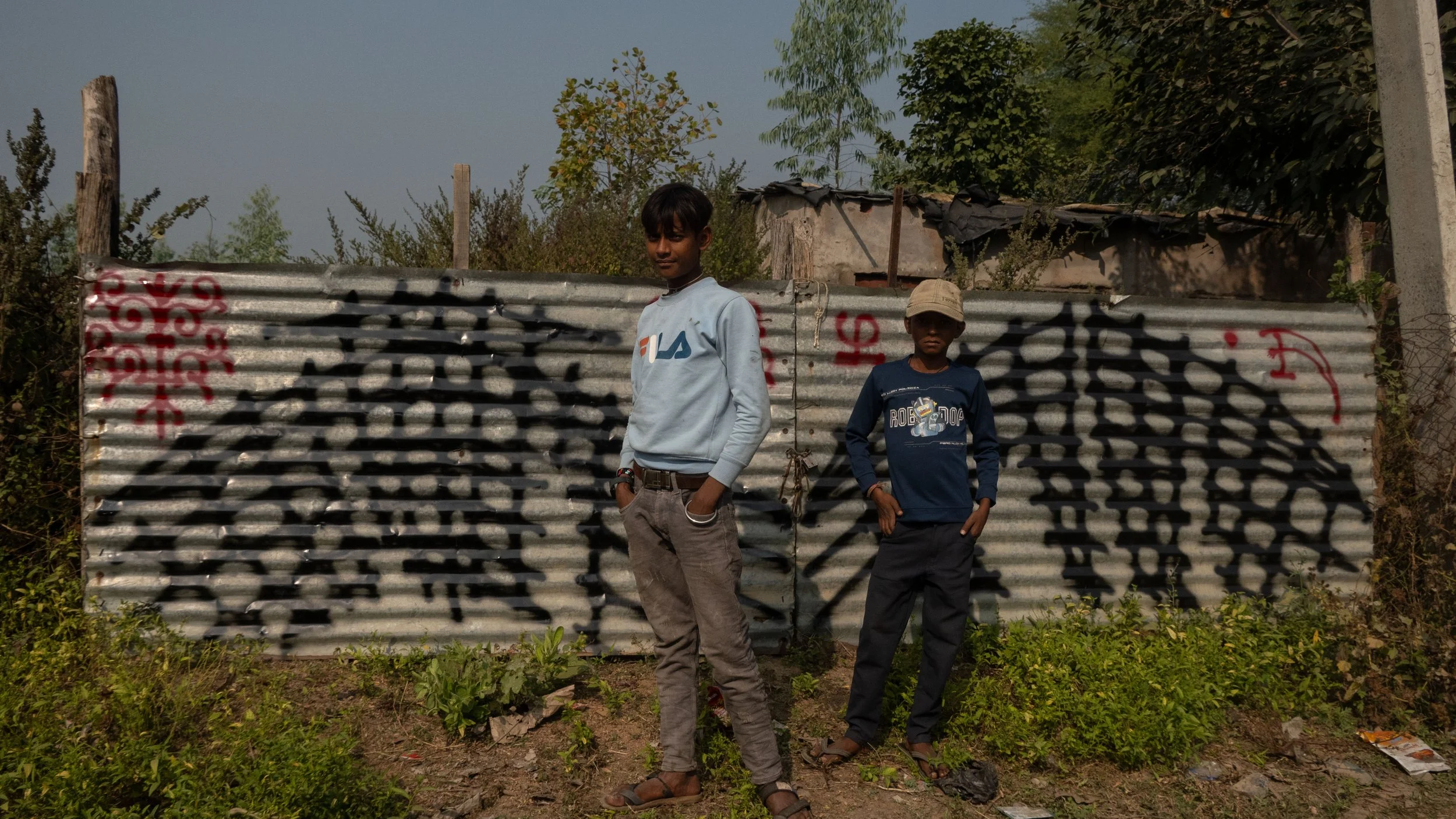
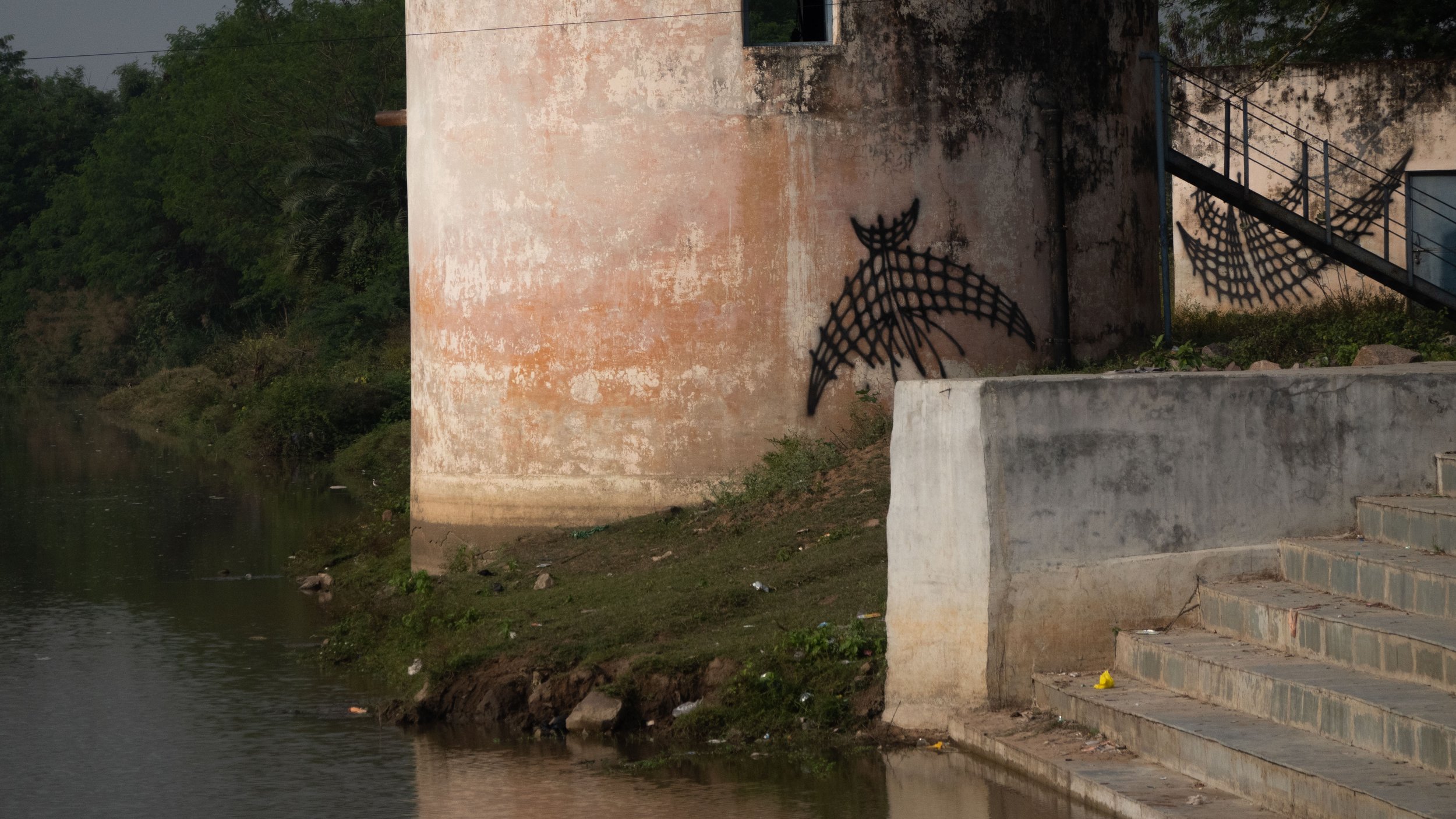
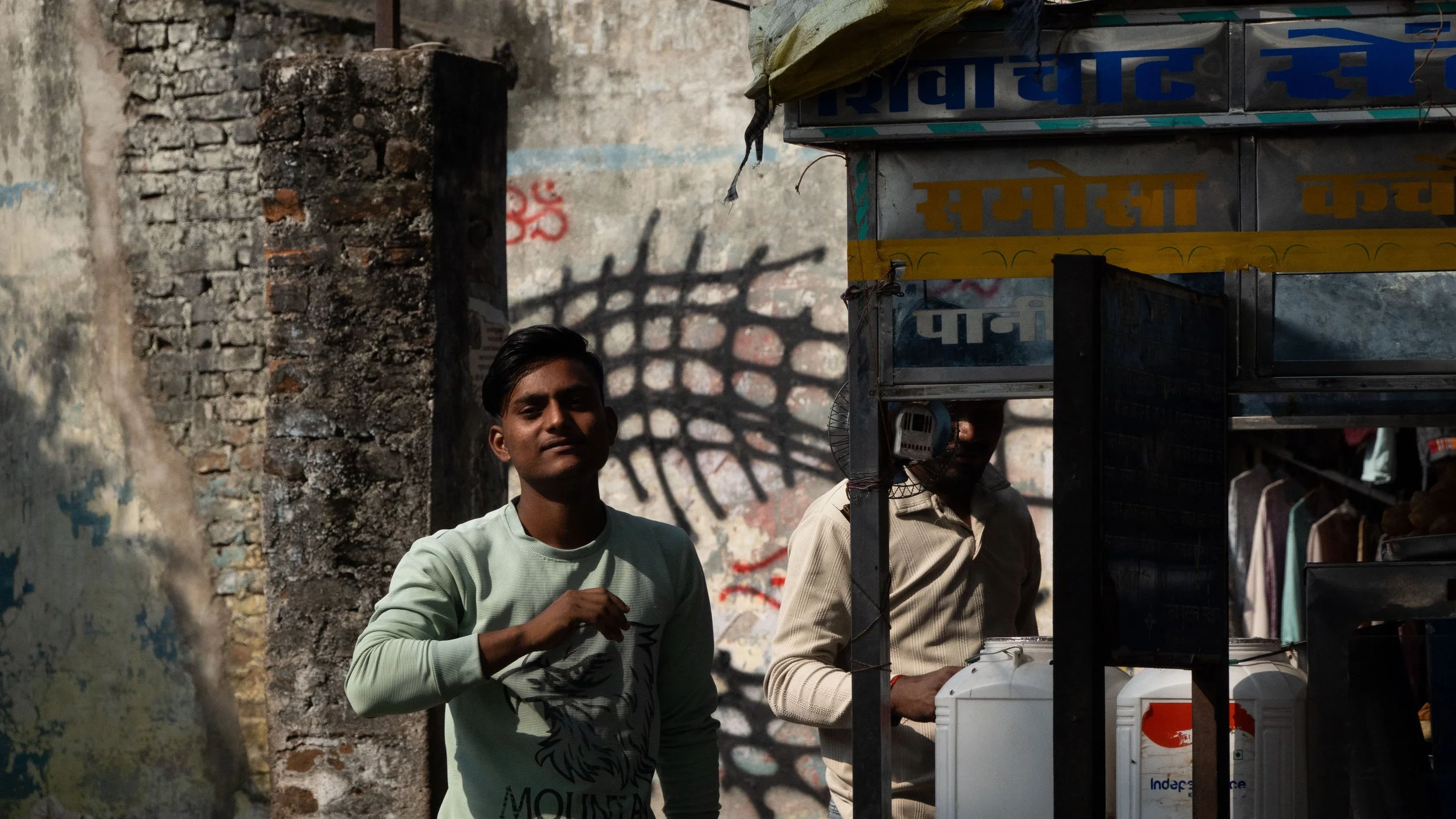
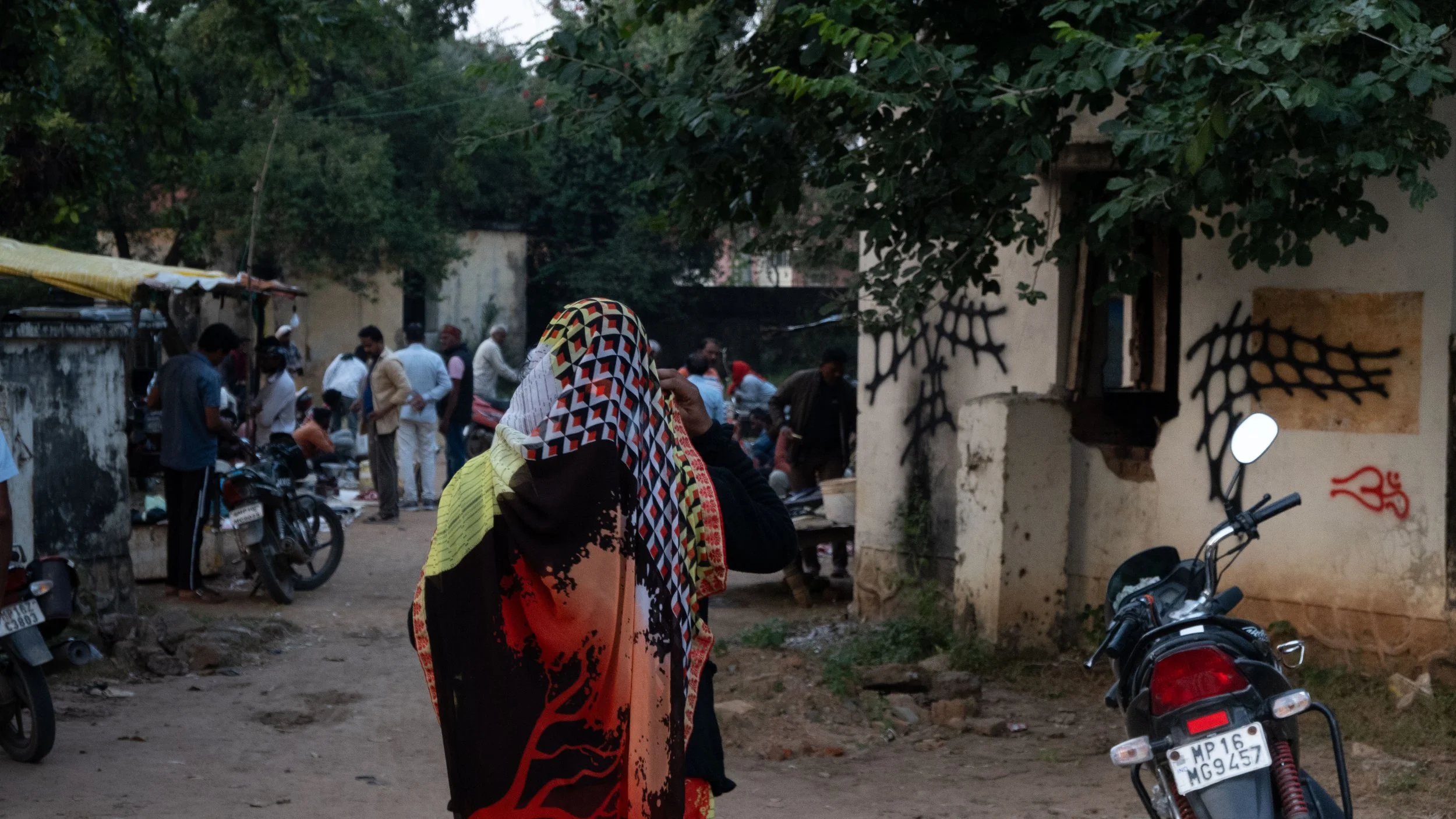
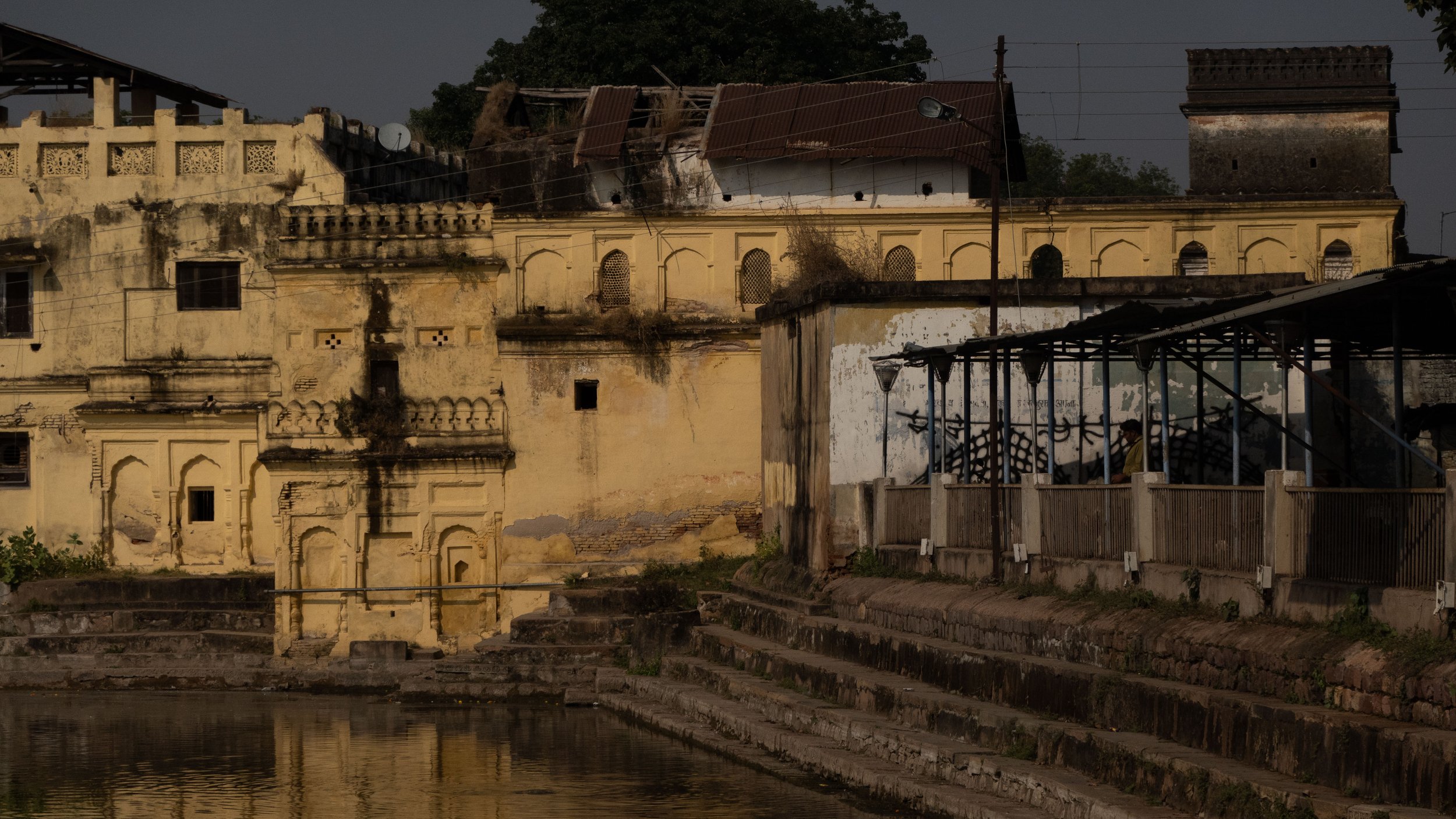
Filmed during Dongbay’s journey in India in 2025, Writing India documents spraying practices and movement through public space. Shot primarily with a hunting trail camera, the work adopts a restrained, observational rhythm focused on time, repetition, and pause.
Filmed, edited, and directed by Dongbay
Soundtrack: Mist Of Misery – A Forest Of Misenchantment
Dongbay Burners
A selection of Dongbay Burners produced in public space during the same period, extending symbolic language across different urban environments.